
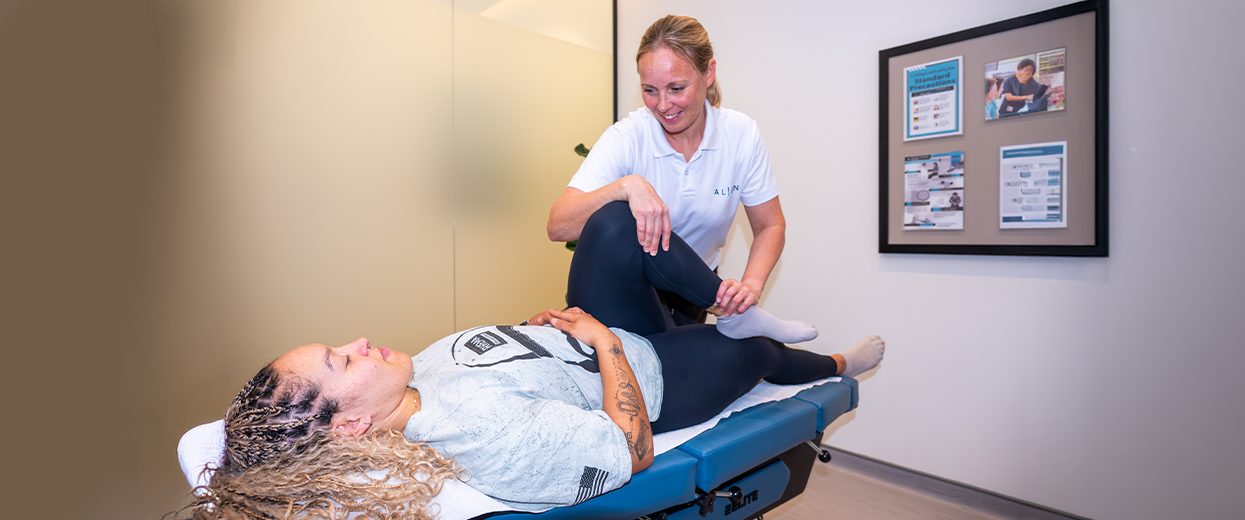
Knee Replacement Recovery: Why Physiotherapy Rehabilitation Makes All the Difference
Knee replacement surgery, whether total or partial, is a significant procedure that relieves pain and restores joint function for people whose knee has been severely damaged by arthritis or injury. But the surgery itself is only the beginning. What happens in the weeks and months that follow, specifically the quality and consistency of rehabilitation, has a profound influence on the final outcome.
Physiotherapy after knee replacement is not optional. It is the mechanism through which the functional gains made possible by surgery are actually realised. Understanding what rehabilitation involves, why it matters, and what to expect at each stage helps patients approach their recovery with realistic expectations and the commitment it requires.
Align Health is a DOH-certified rehabilitation center in Abu Dhabi.The information in this blog is for educational purposes only and is not a substitute for professional medical advice, diagnosis, or treatment. Always consult your surgeon and a qualified physiotherapist regarding your specific post-operative care.
Why Rehabilitation Matters After Knee Replacement
Knee replacement surgery replaces the damaged surfaces of the knee joint with prosthetic components, but it does not restore the strength, flexibility, and movement patterns that the joint needs to function well in daily life. These have to be rebuilt through progressive rehabilitation.
Without structured physiotherapy, patients are at risk of developing persistent stiffness, muscle weakness, altered gait patterns, and reduced confidence in the joint, all of which limit the functional benefit of the surgery. Research consistently demonstrates that patients who engage in structured physiotherapy after knee stiffness physiotherapy replacement achieve better range of movement, greater strength, and higher levels of functional independence than those who do not.
The Stages of Knee Replacement Rehabilitation
Stage One: The Immediate Post-Operative Phase (Days 1 to 14)
Rehabilitation begins within 24 hours of surgery. In the hospital setting, a physiotherapist will work with you to begin gentle movement of the knee, assist you to sit up and stand, and guide your first steps with a walking aid. The goals of this phase are to manage pain and swelling, prevent complications such as blood clots, and begin restoring basic movement and weight bearing.
On discharge from hospital, you will typically be given a home exercise programme covering gentle range of movement exercises, quadriceps activation, and safe weight bearing with a walking aid. Following this programme consistently is critical in the first two weeks, as early movement prevents stiffness from developing in the healing joint.
Stage Two: Early Rehabilitation (Weeks 2 to 6)
This phase focuses on progressively improving knee range of movement, rebuilding quadriceps and hamstring strength, and restoring normal walking pattern. Physiotherapy sessions in this phase typically include hands-on treatment to address stiffness and swelling, guided exercise progression, and assessment of gait to identify and correct compensatory movement patterns.
By the end of this stage, most patients are walking without a walking aid on flat surfaces, have regained a functional range of knee movement, and are managing daily activities such as stairs with increasing confidence.
Stage Three: Strengthening and Functional Recovery (Weeks 6 to 12)
As the joint continues to heal and the patient’s strength improves, rehabilitation progresses to more challenging exercises targeting quadriceps, hamstring, gluteal, and calf strength. Balance and proprioception training is introduced, which is critical for joint stability and fall prevention.
Functional activities relevant to the patient’s goals are progressively reintroduced. For some patients this means returning to driving, for others it means returning to recreational walking, swimming, or golf. A physiotherapist guides which activities are appropriate at each stage and how to progress them safely.
Stage Four: Return to Activity and Long-Term Maintenance (Three Months Onward)
By three months, most patients with uncomplicated recoveries are managing daily activities independently and are progressively returning to their pre-surgery lifestyle. Full recovery from knee replacement, including the return of maximum strength and confidence in the joint, typically takes six to twelve months.
Physiotherapy treatment in Abu Dhabi in this later stage focuses on returning to specific activities, optimising movement quality, and establishing a long-term maintenance exercise routine that protects the prosthetic joint and supports overall musculoskeletal health.
What Physiotherapy Involves in Knee Replacement Rehabilitation
Manual Therapy
Hands-on techniques to mobilise the knee joint, reduce scar tissue restriction, and improve the flexibility of surrounding soft tissue. Manual therapy is particularly important in the early stages when stiffness is the primary barrier to progress.
Exercise Rehabilitation
A progressive, individually tailored exercise programme addressing range of movement, strength, balance, and functional movement. Exercises are advanced systematically in line with healing tissue and the patient’s response to loading.
Gait Retraining
Many patients develop altered walking patterns before surgery as a result of years of pain-related compensation. Physiotherapy identifies these patterns and works to restore a normal, efficient gait that places appropriate and balanced load through the new joint.
Swelling Management
Swelling is a normal part of the healing process after knee replacement and can persist for several months. Physiotherapy techniques including elevation guidance, ice application, compression, and specific exercises support effective swelling management throughout the rehabilitation period.
Education and Goal Setting
Understanding the recovery process, having realistic expectations for each stage, and setting meaningful functional goals all contribute to better outcomes. Your physiotherapist will provide clear guidance on what to expect, what to avoid, and how to progress your activities safely.
Common Questions About Knee Replacement Recovery
Patients and their families often have concerns about the recovery process. Some of the most frequently raised include:
- How much pain is normal after surgery and for how long
- When it is safe to drive, return to work, or travel
- Whether the replacement joint can be damaged by exercise
- What activities are safe in the long term and which should be avoided
Your physiotherapist and surgical team are the most appropriate sources of guidance on these questions, as the answers vary depending on the individual patient, the type of replacement, and the rate of recovery.
Knee Replacement Rehabilitation at Align Health
At Align Health, our physiotherapy team provides structured post-operative rehabilitation for patients recovering from knee replacement surgery across our Abu Dhabi clinics. We work in coordination with your surgical team to ensure your rehabilitation plan is aligned with your operative report and post-operative instructions.
Our approach combines manual therapy, progressive exercise rehabilitation, gait retraining, and patient education to support the best possible functional outcome from your surgery.
If you are preparing for or recovering from knee replacement and are looking for an experienced physiotherapist in Abu Dhabi to guide your rehabilitation, book your appointment at alignhealth.ae or call 02 585 8322 (Al Zeina) or 02 671 9103 (Saadiyat).
Frequently Asked Questions
How soon after surgery should I start physiotherapy?
Physiotherapy typically begins within 24 hours of surgery in the hospital setting. On discharge, a home exercise programme is provided immediately. Outpatient physiotherapy with a clinic-based physiotherapist usually begins within one to two weeks of discharge, depending on your surgeon’s protocol and your progress.
How long will I need physiotherapy after knee replacement?
Most patients benefit from structured outpatient physiotherapy for a minimum of six to twelve weeks following surgery. The full recovery process, including the return of maximum strength and function, typically takes six to twelve months. The duration and frequency of physiotherapy sessions will be tailored to your individual progress and goals.
Will physiotherapy be painful?
Some discomfort during rehabilitation is normal, particularly when working on range of movement in the early weeks. Your physiotherapist will distinguish between discomfort that is a normal part of recovery and pain that signals a problem, and will adjust treatment intensity accordingly. Pain management is an integral part of post-operative physiotherapy.
Can I do physiotherapy exercises at home?
Yes, and this is an essential component of recovery. Your physiotherapist will provide a home exercise programme that complements your clinic sessions. Consistency with home exercises between appointments significantly accelerates recovery and improves outcomes.
What happens if I do not do physiotherapy after knee replacement?
Without structured rehabilitation, the risk of developing persistent stiffness, poor muscle strength, altered walking patterns, and reduced confidence in the joint is significantly higher. These factors limit the functional benefit of the surgery and can result in ongoing pain or disability despite a technically successful procedure. Physiotherapy is the mechanism through which surgical success translates into functional independence.
Blog written by Fernando Tassi Salati, Physiotherapist.