
Ankle pain physiotherapy treatment in Abu Dhabi is a non-surgical treatment approach that identifies and addresses the ligament, tendon, joint, and muscular causes of ankle and foot pain. Rather than relying on rest or pain relief alone, physiotherapy for ankle pain uses hands-on therapy and targeted exercise to restore stability, reduce pain, and prevent recurrence.
Ankle pain can develop suddenly following a sprain or injury, or gradually over time through overuse, poor footwear, or biomechanical imbalances. Whether your symptoms are acute or persistent, our clinical team at Align Health assesses every patient individually, building a treatment plan around your specific condition, activity levels, and recovery goals.
What Conditions Can Ankle Pain Physiotherapy Help Treat?
Physiotherapy for ankle and foot pain covers a wide range of lower-limb conditions. Physiotherapy experts at Align Health will conduct a full movement and symptom assessment at your first appointment to determine the most appropriate treatment pathway.
- Ankle sprains and ligament injuries – acute lateral, medial, or syndesmosis sprains, including high-ankle sprains common in contact sport
- Achilles tendinopathy – pain and stiffness in the Achilles tendon from overuse, particularly in runners and active adults
- Plantar fasciitis – inflammation of the plantar fascia causing sharp heel and arch pain, especially in the morning
- Peroneal tendon injuries – pain along the outer ankle from tendon irritation or subluxation
- Ankle osteoarthritis – joint wear causing stiffness, swelling, and deep ankle pain, often following previous injury
- Posterior tibial tendon dysfunction – inner ankle and arch pain contributing to flat foot posture
- Chronic ankle instability – recurring giving-way or sprains due to incomplete ligament healing or poor neuromuscular control
- Post-fracture rehabilitation – structured recovery following ankle fracture, including post-cast mobility and strength restoration
- Stress fractures of the foot – bone stress injuries in runners or individuals returning to high-impact activity
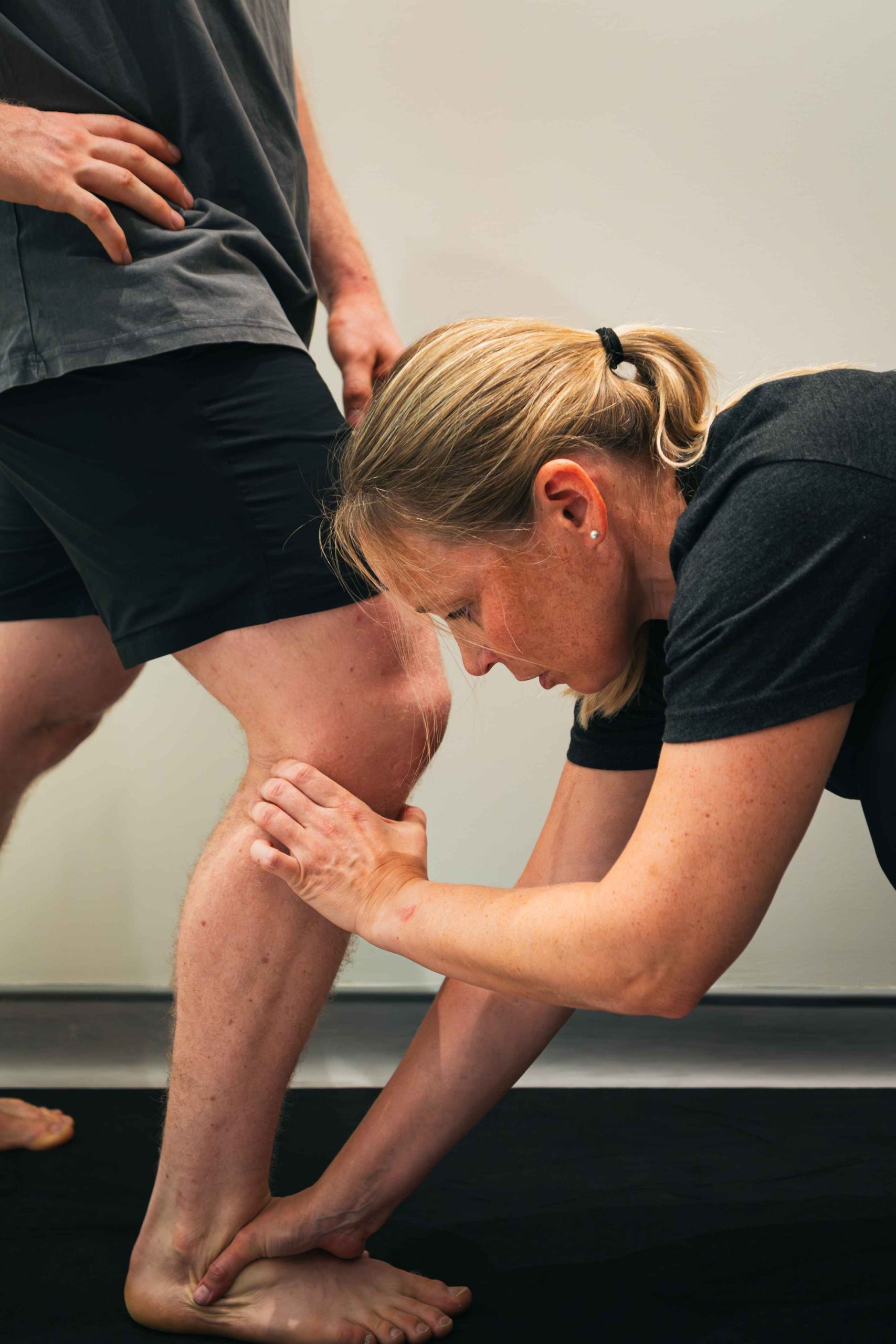
How Does Ankle Pain Physiotherapy Work?
Your first session at Align Health begins with a detailed physical assessment — your physiotherapist will review your history, assess ankle and foot range of motion, test ligament integrity and muscle strength, and analyse your gait and loading patterns before designing your personalised treatment plan.
Ankle pain physiotherapy at Align Health typically combines the following evidence-based techniques:
| Technique | What it does |
|---|---|
| Manual therapy | Hands-on joint mobilisation and soft tissue release to restore ankle dorsiflexion, reduce stiffness, and relieve pain |
| Therapeutic exercise | Progressive ankle strengthening, proprioception and balance training, and calf rehabilitation to restore function and prevent reinjury |
| Dry needling | Releases active trigger points in the calf, peroneals, and plantar fascia contributing to localised and referred foot pain |
| Gait and biomechanical retraining | Corrects walking, running, or loading patterns that place excessive stress on the ankle or foot structures |
| Taping and bracing | Kinesiology taping or ankle bracing used to offload injured structures and support return to activity during rehabilitation |
Treatment frequency depends on the severity, duration, and cause of your ankle pain. Most patients with acute sprains or tendon irritation begin to notice meaningful improvement within a few sessions. Chronic instability, post-fracture cases, or tendinopathy typically requires a structured programme, with a home exercise plan running alongside clinic appointments.
Signs You May Need Ankle Pain Physiotherapy
Ankle and foot pain is common, but certain symptoms indicate that a physiotherapy assessment is strongly recommended rather than waiting for the pain to resolve on its own. You should book an appointment at a trusted rehabilitation centre in Abu Dhabi if you are experiencing:
- Ankle or foot pain lasting more than two weeks
- Swelling, bruising, or instability following an ankle sprain
- Pain in the heel or arch that is worst in the morning or after prolonged standing
- Achilles pain or stiffness before, during, or after physical activity
- A recurring sensation of the ankle giving way during walking or sport
- Reduced ability to dorsiflex, plantarflex, or rotate the ankle fully
- Ankle or foot pain that wakes you at night or disrupts sleep
- Pain that has returned following a previous ankle injury that was not fully rehabilitated
When to seek urgent medical attention instead:
Go to the emergency department if your ankle pain is accompanied by the following:
- Severe pain and inability to bear any weight following a fall or impact
- Significant deformity or bone protrusion at the ankle or foot
- Signs of infection including fever, spreading redness, and warmth over the joint
- Sudden complete loss of Achilles function with a popping sensation — this may indicate a tendon rupture requiring urgent assessment
These symptoms require immediate medical assessment and are outside the scope of physiotherapy treatment.
Who Can Benefit From Ankle Pain Physiotherapy?
Ankle pain physiotherapy at Align Health is appropriate for a wide range of patients. Your physiotherapist will confirm suitability at your initial assessment. Those who commonly benefit include:
- Runners and endurance athletes – with Achilles tendinopathy, plantar fasciitis, or stress fractures from high training loads
- Team sport and court sport players – with acute ankle sprains or chronic instability from repeated lateral movements
- Active adults returning to exercise – who have a history of unresolved ankle injuries or persistent foot pain
- Office workers and those on their feet all day – with plantar fasciitis or posterior tibial tendon pain from prolonged loading
- Post-fracture patients – requiring structured rehabilitation following ankle fracture or surgery
- Anyone with recurring ankle sprains who continues to experience instability or reduced confidence on uneven ground
Why Choose Align Health?
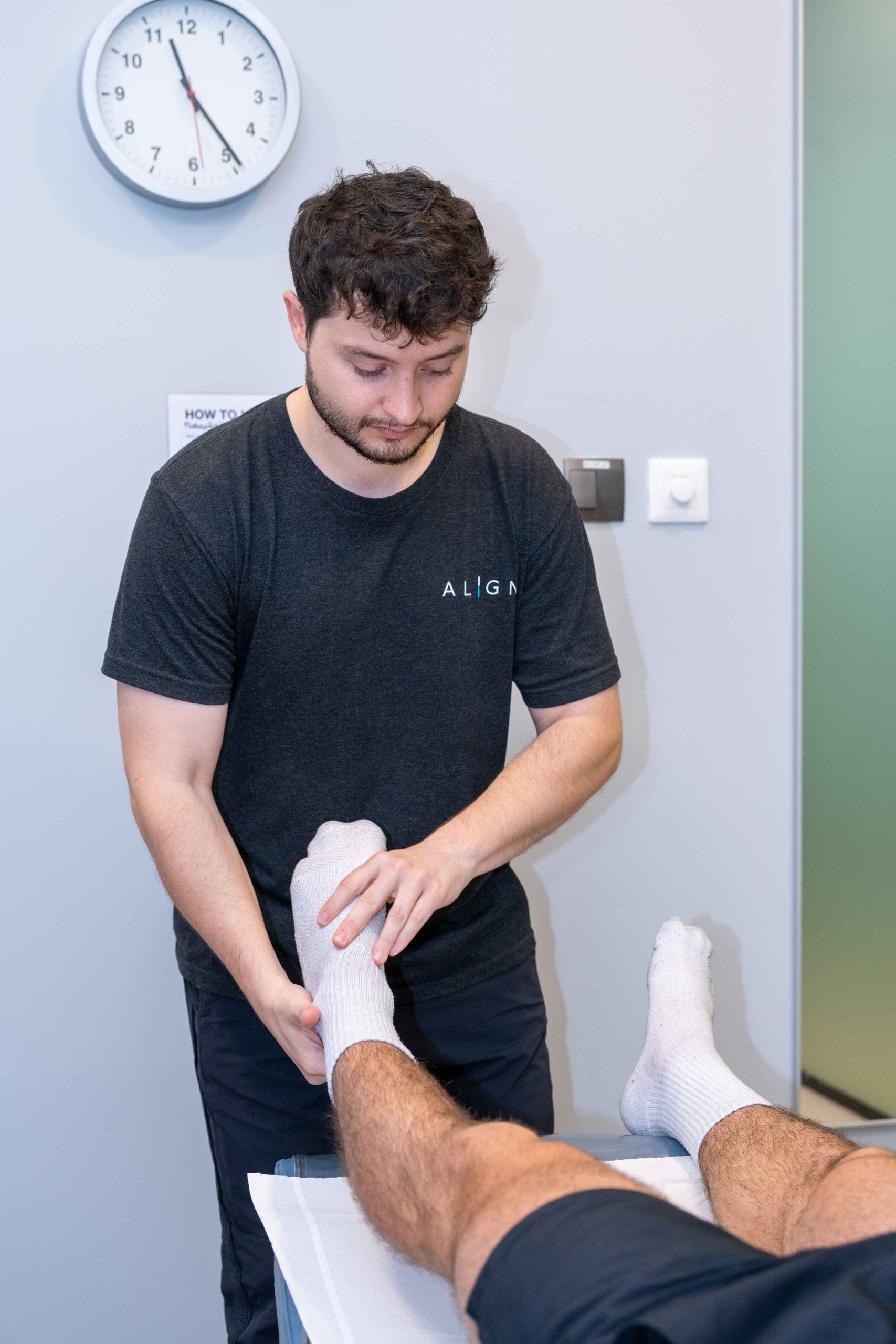
At Align Health, every ankle pain programme is built from your individual movement and biomechanical assessment — not a standard protocol. Our physiotherapists are experienced in treating the full range of ankle and foot conditions, from straightforward lateral ligament sprains to complex post-surgical and tendon rehabilitation.
- DOH-licensed physiotherapists – with specialist experience in ankle, foot, and lower limb musculoskeletal conditions
- Personalised treatment plans – designed around your physical assessment, sport, and recovery goals
- Two Abu Dhabi clinic locations – Saadiyat Island clinic and Al Zeina clinic (Al Raha Beach)
Benefits of Ankle Pain Physiotherapy
Physiotherapy for ankle pain and foot pain may help to:
- Reduce acute and chronic ankle pain – through targeted manual therapy and progressive exercise
- Restore full ankle range of motion – in dorsiflexion, plantarflexion, inversion, and eversion
- Relieve heel, arch, and Achilles pain originating from tendon or fascial irritation
- Rebuild ankle stability and proprioception – essential for reducing the risk of reinjury
- Strengthen the calf, peroneal, and intrinsic foot muscles – that support and protect the ankle joint
- Correct biomechanical patterns – that place excessive load on the ankle, foot, or Achilles during activity
- Prevent recurrence – by addressing the root cause rather than managing symptoms alone
- Return to walking, running, and sport – faster with a structured rehabilitation programme
Individual Results May Vary
Physiotherapy treatment results vary significantly from person to person based on numerous factors:
- The nature and severity of your condition
- Your age, overall health, and medical history
- How long you have had the condition
- Your adherence to the treatment plan and home exercises
- Lifestyle factors and activity levels
- Individual biological and physiological differences
FAQs
If your ankle pain has lasted more than two weeks, followed an injury that did not fully resolve, or involves recurring instability or giving way, a physiotherapy assessment is strongly recommended. A physiotherapist can confirm whether clinical treatment is needed or whether self-management is appropriate. Achilles and tendon-related symptoms in particular should be assessed early — delayed treatment is associated with longer recovery times and a higher risk of the condition becoming chronic.
Yes. Chronic ankle instability — where the ankle gives way repeatedly after an incomplete recovery from a sprain — responds well to physiotherapy. Research supports proprioceptive training and progressive strengthening as effective interventions for restoring ankle stability and reducing reinjury rates. Your physiotherapist will assess the degree of mechanical and functional instability and build a programme to address both.