
Physiotherapy for shoulder pain in Abu Dhabi is a non-surgical treatment approach that helps identify and manage pain, stiffness, weakness, and movement limitations around the shoulder joint. Shoulder pain physiotherapy may include hands-on therapy, strengthening exercises, mobility work, posture correction, and rehabilitation based on the cause of your symptoms.
What Conditions Can Shoulder Rehabilitation Treat?
Shoulder rehabilitation may help treat a wide range of shoulder-related concerns. Your physiotherapist will assess your pain, movement, strength, posture, and daily activities before recommending the right treatment plan.
- Rotator cuff injuries – pain, weakness, or strain affecting the shoulder tendons
- Shoulder impingement – pain when lifting the arm or reaching overhead
- Frozen shoulder – stiffness and reduced shoulder movement
- Shoulder bursitis – inflammation causing pain and tenderness around the joint
- Tendon pain – irritation or overload in the shoulder tendons
- Postural shoulder pain – discomfort linked to desk work, rounded shoulders, or poor sitting habits
- Sports-related shoulder injuries – common in gym training, swimming, tennis, and overhead sports
- Post-surgery shoulder rehabilitation – structured recovery after shoulder procedures
- Referred neck-related shoulder pain – shoulder discomfort linked to cervical spine or nerve irritation, which may also benefit from neck pain physiotherapy when symptoms originate from the cervical spine.
How Does Shoulder Rehabilitation Work?
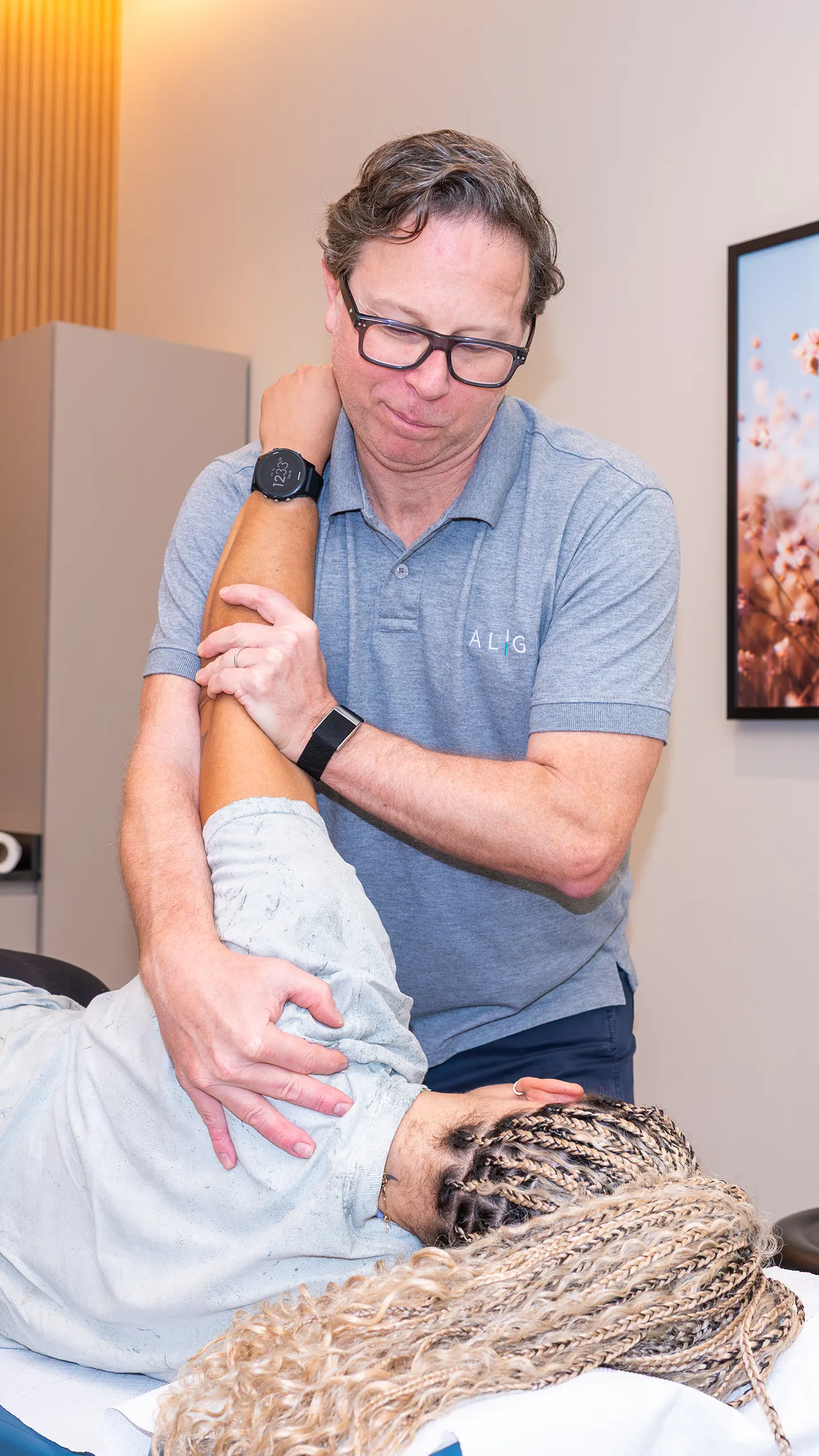
Your first session begins with a detailed assessment. Your physiotherapist will review your symptoms, check your shoulder range of motion, test your strength, assess your posture, and determine whether the pain is coming from the shoulder joint, muscles, tendons, or nearby structures.
| Technique | What it does |
|---|---|
| Manual therapy | Helps improve joint movement, reduce stiffness, and ease soft tissue tension |
| Mobility training | Restores shoulder movement for reaching, lifting, dressing, and exercise |
| Postural retraining | Addresses rounded shoulders, desk posture, and movement habits that load the shoulder |
| Dry needling | May help release trigger points in the shoulder, upper back, and neck muscles |
| Sports rehabilitation | Supports safe return to gym training, swimming, tennis, or overhead sports |
Treatment frequency depends on your condition, pain level, and recovery goals. Some patients with recent shoulder strain may improve within a few sessions, while long-term stiffness, frozen shoulder, or post-surgical rehabilitation may require a structured programme over several weeks.
Signs You May Need Shoulder Pain Physiotherapy
Shoulder pain is common, but it should not be ignored if it affects your movement, sleep, work, or exercise. You may benefit from a physiotherapy assessment if you are experiencing:
- Shoulder pain lasting more than two weeks
- Pain when lifting your arm overhead
- Difficulty reaching behind your back
- Pain while dressing, sleeping, or carrying bags
- Shoulder weakness during gym exercises or sports
- Stiffness that limits daily movement
- Clicking, catching, or discomfort during movement
- Pain spreading from the neck into the shoulder or arm
- Shoulder pain after a fall, gym injury, or sports incident
A physiotherapist can assess whether your shoulder pain can be managed with rehabilitation or whether further medical investigation may be needed.
When to Seek Urgent Medical Care:
If your shoulder pain occurs alongside chest discomfort, shortness of breath, dizziness, or pain spreading into the arm – particularly the left arm – seek immediate medical attention, as these symptoms may require emergency assessment.
Who Can Benefit from the Treatment?
Shoulder pain physiotherapy at Align Health may be suitable for a wide range of patients. Your physiotherapist will confirm suitability during your first assessment.
- Office workers with posture-related shoulder tension
- Gym-goers with lifting-related pain or rotator cuff strain
- Athletes involved in swimming, tennis, padel, CrossFit, or overhead sports may also benefit from sports massage to support recovery and reduce muscle tension.
- Older adults experiencing stiffness or reduced shoulder mobility
- Patients with frozen shoulder who need guided mobility and strengthening
- Post-surgery patients requiring structured shoulder rehabilitation, who may also benefit from hot and cold therapy to help manage pain and swelling during recovery.
- Anyone with shoulder pain affecting sleep, work, exercise, or daily tasks
Why Choose Align Health for Shoulder Pain Physiotherapy?
- Personalised treatment plans based on your movement assessment
- DOH-licensed physiotherapists experienced in musculoskeletal rehabilitation
- Support for acute and chronic shoulder pain
- Exercise-based recovery plans to help improve strength and movement
- Clinic locations in Abu Dhabi including Saadiyat Island and Al Zeina
- Rehabilitation for daily life, work, sport, and post-surgery recovery
Benefits of Shoulder Pain Physiotherapy
Shoulder pain physiotherapy may help to:
- Reduce shoulder pain and stiffness
- Improve shoulder range of motion
- Strengthen the rotator cuff and shoulder blade muscles
- Support recovery from sports or gym-related injuries
- Improve posture and shoulder mechanics
- Reduce pain during lifting, reaching, or sleeping
- Support post-surgery shoulder rehabilitation
- Lower the risk of recurring shoulder problems
Individual Results May Vary
Physiotherapy treatment results vary significantly from person to person based on numerous factors:
- The nature and severity of your condition
- Your age, overall health, and medical history
- How long have you had the condition
- Your adherence to the treatment plan and home exercises
- Lifestyle factors and activity levels
- Individual biological and physiological differences
FAQs
You may need physiotherapy if your shoulder pain lasts more than two weeks, limits movement, affects sleep, or causes weakness during daily tasks or exercise. A physiotherapist can assess the cause of your pain and create a treatment plan based on your shoulder movement, strength, posture, and symptoms.