
Hip pain physiotherapy in Abu Dhabi is a non-surgical treatment approach that identifies and addresses the muscular, joint, postural, and nerve-related causes of hip pain. Rather than relying on rest or pain medication alone, physiotherapy for hip pain uses hands-on therapy and targeted exercise to restore movement, reduce pain, and prevent the condition from returning.
Hip pain can range from a dull ache that builds after exercise to a sharp, limiting pain that disrupts sleep, walking, and daily activity. Our clinical team at Align Health assesses each patient individually, developing a treatment plan tailored to your specific condition, lifestyle, and recovery goals.
What Conditions Can Hip Pain Physiotherapy Help Treat?
Physiotherapy for hip pain covers a wide range of hip, groin, and lower limb conditions. Your physiotherapist will carry out a full movement and symptom assessment at your first appointment to confirm the most appropriate treatment pathway.
- Osteoarthritis – gradual wear of the hip cartilage causing stiffness and deep joint pain, common in adults over 50
- Hip flexor strain – acute or chronic tightness in the front of the hip, frequent in runners, cyclists, and desk-based workers
- Hip bursitis – inflammation of the fluid sacs cushioning the hip joint, causing localised pain on the outer hip
- Labral tears – damage to the cartilage ring surrounding the hip socket, often associated with clicking or locking
- Femoroacetabular impingement (FAI) – abnormal contact between the ball and socket of the hip during movement
- Piriformis syndrome – irritation of the piriformis muscle causing deep buttock pain, sometimes with sciatic symptoms
- Referred pain from the lower back or sacroiliac joint – commonly mistaken for a hip problem
- Post-surgical rehabilitation – structured recovery following hip replacement or arthroscopy
How Does Hip Pain Physiotherapy Work?
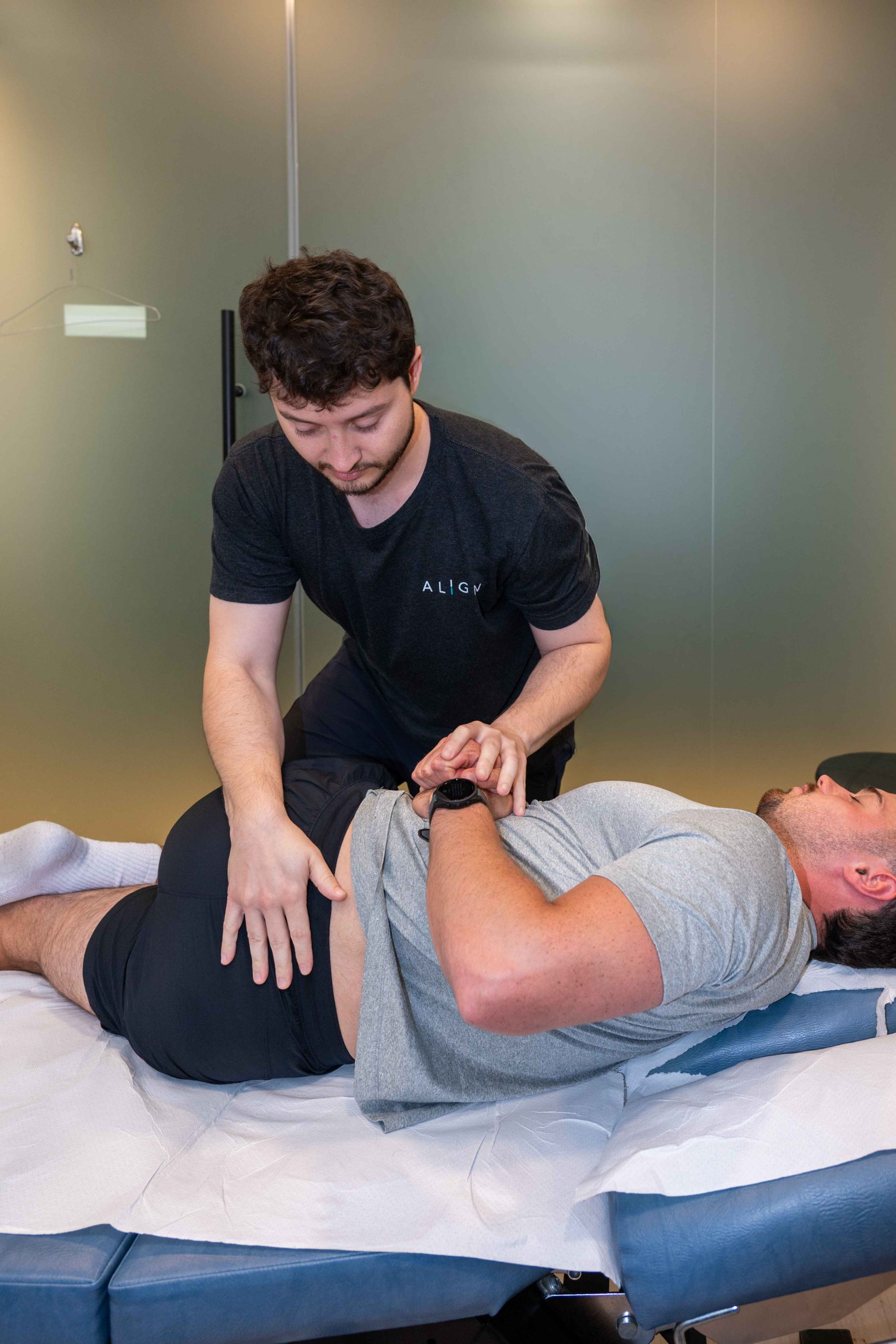
Your first session at Align Health begins with a detailed physical assessment — your physiotherapist will review your history, test hip and lumbar range of motion, assess muscle strength and nerve function, and identify the structures involved before designing your personalised treatment plan.
Our expert physiotherapy services in Abu Dhabi typically combine the following evidence-based techniques
| Technique | What it does |
|---|---|
| Manual therapy | Hands-on joint mobilisation and soft tissue release to restore hip range of motion and reduce pain |
| Therapeutic exercise | Targeted hip stabiliser, glute, and core strengthening to reduce load on the joint and support long-term recovery |
| Dry needling | Releases active trigger points in the hip flexors, piriformis, and gluteal muscles contributing to referred pain |
| Gait and movement retraining | Corrects walking, running, or training patterns that contribute to abnormal hip loading over time |
| Neural mobilisation | Gentle techniques to reduce nerve irritation causing pain, tingling, or numbness in the leg or foot |
Treatment frequency depends on the severity, duration, and cause of your hip pain. Most patients with acute hip pain begin to notice meaningful improvement within a few sessions. Chronic conditions or post-surgical cases typically require a structured programme, with a home exercise plan running alongside clinic appointments.
Signs You May Need Hip Pain Physiotherapy
Hip pain is common, but certain symptoms indicate that a physiotherapy assessment is strongly recommended rather than waiting for the pain to resolve on its own. You should book an appointment with a trusted physiotherapy centre in Abu Dhabi if you are experiencing the following:
- Hip or groin pain lasting more than two weeks
- Pain that spreads from the hip into the buttock, thigh, or knee
- Stiffness in the hip first thing in the morning or after sitting for extended periods
- A clicking, locking, or catching sensation in the hip during movement
- Reduced ability to rotate, flex, or extend the hip fully
- Hip pain that wakes you at night or disrupts your sleep
- Recurring episodes of hip pain that keep returning
- Pain following a sports injury, fall, or impact
When to seek urgent medical attention instead:
Go to the emergency department if your hip pain is accompanied by the following:
- Severe pain following a fall or trauma with the inability to bear weight
- Sudden loss of sensation or weakness in the leg or foot
- Signs of infection including fever, swelling, warmth, and redness over the joint
- Hip pain accompanied by unexplained weight loss or fatigue
These symptoms require immediate medical assessment and are outside the scope of physiotherapy treatment.
Who Can Benefit From Hip Pain Physiotherapy?
Hip pain physiotherapy at Align Health is appropriate for a wide range of patients. Your physiotherapist will confirm suitability at your initial assessment. Those who commonly benefit include:
- Runners and endurance athletes – with hip flexor strains, bursitis, or labral pathology from high training loads
- Office workers and remote professionals – with hip flexor tightness and postural pain from prolonged sitting
- Older adults with hip osteoarthritis – seeking to reduce pain and maintain mobility without surgery
- Post-surgical patients – requiring structured rehabilitation following hip replacement or arthroscopy
- Anyone with recurring hip or groin pain – that has not responded to rest, stretching, or massage alone
- Patients with referred leg symptoms – linked to hip joint or sciatic nerve irritation
Why Choose Align Health?
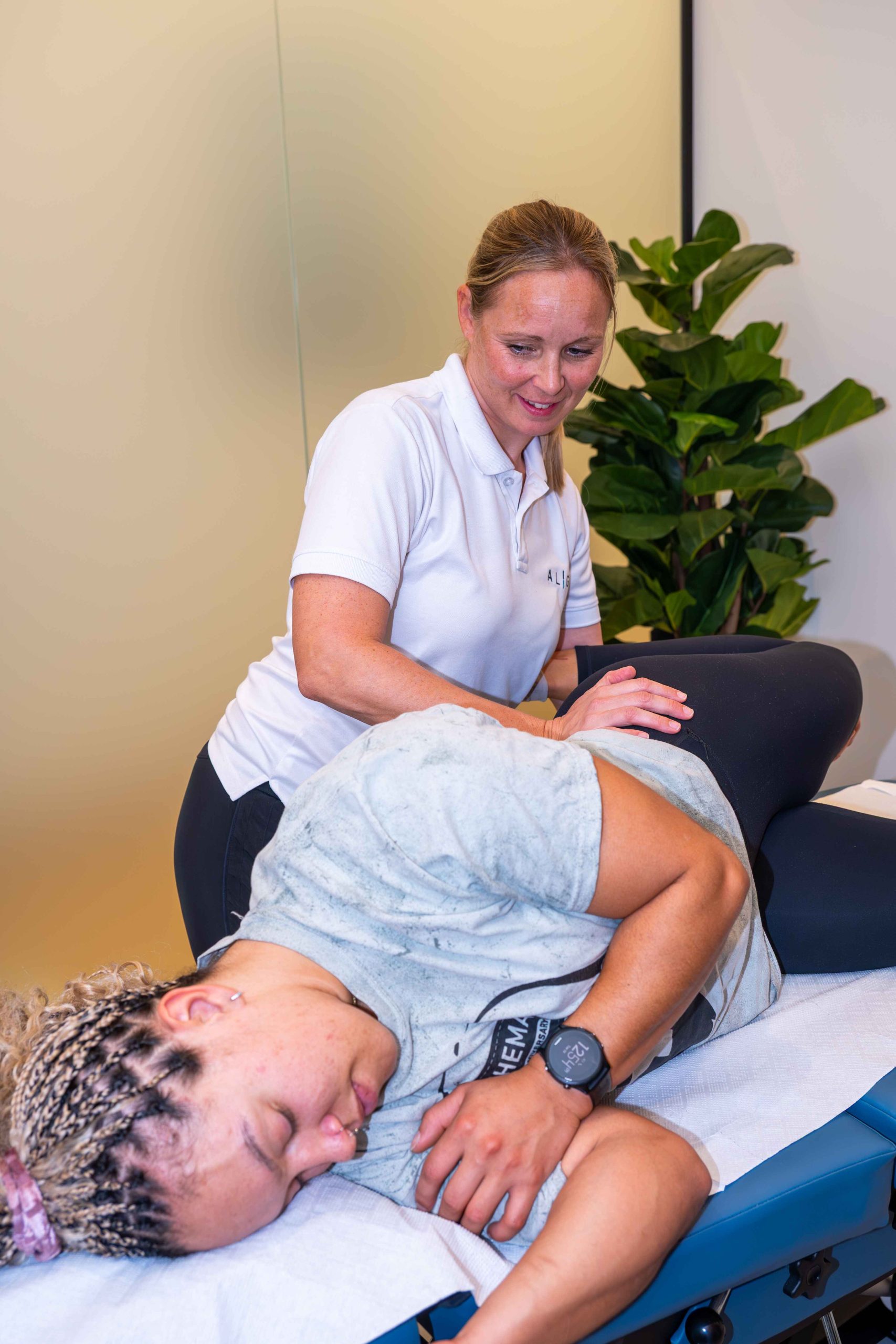
At Align Health, every hip pain programme is built from your individual movement assessment — not a standard protocol. Our physiotherapists are experienced in treating the full range of hip conditions, from straightforward muscle strains to complex post-surgical rehabilitation.
- DOH licensed physiotherapists – with specialist experience in hip, pelvic, and musculoskeletal conditions
- Personalised treatment plans – designed around your physical assessment and recovery goals
- Two Abu Dhabi clinic locations – Saadiyat Island clinic and Al Zeina clinic (Al Raha Beach)
Benefits of Hip Pain Physiotherapy
Physiotherapy for hip pain may help to:
- Reduce acute and chronic hip pain – through targeted manual therapy and exercise
- Restore full range of motion – in rotation, flexion, and extension
- Relieve groin and buttock pain originating from the hip joint or surrounding muscles
- Reduce nerve-related symptoms – including leg pain, tingling, and numbness
- Strengthen the deep hip stabilisers and glutes – that support and protect the joint
- Correct movement patterns – that place abnormal load on the hip during walking, running, or exercise
- Prevent recurrence – by addressing the root cause, not just the immediate symptoms
- Return to work, driving, and sport – faster with a structured rehabilitation programme
Individual Results May Vary
Physiotherapy treatment results vary significantly from person to person based on numerous factors:
- The nature and severity of your condition
- Your age, overall health, and medical history
- How long have you had the condition
- Your adherence to the treatment plan and home exercises
- Lifestyle factors and activity levels
- Individual biological and physiological differences
The timeframes and outcomes described on this page reflect general clinical observations and should not be taken as a guarantee of your personal recovery. Your physiotherapist will provide a realistic expectation at your initial assessment based on your specific condition and history.
FAQs
If your hip pain has lasted more than two weeks, is limiting your movement, or is accompanied by groin, buttock, or leg symptoms, a physiotherapy assessment is strongly recommended. A physiotherapist can confirm whether clinical treatment is needed or whether self-management is appropriate. Hip conditions that involve nerve symptoms or clicking and locking should be assessed promptly — early intervention is associated with faster, more complete recovery.
Yes. Physiotherapy is a primary non-surgical treatment for hip osteoarthritis. Clinical evidence supports exercise therapy and manual therapy as effective approaches for reducing pain, improving joint mobility, and delaying or avoiding the need for hip replacement surgery.