
Post-Marathon Leg Pain: What’s Normal and When Should You Get It Checked?
Finishing a marathon is a major physical effort, so waking up the next morning with heavy, stiff, sore legs is not unusual. Your quadriceps may complain on stairs, your calves may feel tight, and getting up from a chair can suddenly feel like its own event. For most runners, this reflects the normal recovery response to prolonged loading rather than a new injury.
The challenge is knowing where normal post-race soreness ends and where pain deserves a closer look. A marathon can expose an irritated tendon, bone stress injury, muscle strain, joint problem, or other issue that was not obvious during the race. Knowing what to watch for can help you recover without either panicking about every ache or ignoring something important.
Align Health is a DOH-certified physiotherapy clinic in Abu Dhabi. The information in this blog is for educational purposes only and is not a substitute for professional medical advice, diagnosis, or treatment. Always consult a qualified healthcare provider regarding your specific condition.
Why Do Your Legs Hurt After a Marathon?
A marathon places repeated load through the muscles, tendons, joints, and bones of the lower limbs for several hours. The muscles also perform a large amount of eccentric work, particularly when controlling landing and deceleration. That can contribute to exercise-induced muscle damage and delayed onset muscle soreness, commonly called DOMS.
DOMS usually develops after unfamiliar or demanding exercise rather than during the activity itself. The soreness can become more noticeable during the first one to three days and then gradually settle. Recent research on marathon runners also shows that neuromuscular fatigue and some markers of muscle damage can remain altered beyond the finish line, which is one reason performance may feel reduced even when you are otherwise well.
What Normal Post-Marathon Soreness Often Feels Like
Normal recovery does not look identical for every runner, but post-marathon muscle soreness is usually broad rather than sharply localised. Both legs may feel tired, stiff, tender, or heavy, particularly through the quadriceps, calves, hamstrings, and glutes.
- The discomfort is mostly muscular rather than a sharp pain in one exact spot.
- Stairs, squatting, or sitting down may feel uncomfortable because the muscles are sore.
- Gentle walking may feel stiff initially but becomes easier as you move.
- Symptoms gradually improve rather than becoming more severe each day.
- There is no major loss of function, significant swelling, or inability to put weight through the leg.
The goal during this phase is not to force the soreness away. Your body has been through a demanding event, and recovery is part of training too.
When Leg Pain Is Less Typical
Pain deserves more attention when it behaves differently from general muscle soreness. A sharp or highly localised pain that changes the way you walk, pain directly over a bone, marked joint swelling, significant bruising, or a feeling that the leg cannot support you should not simply be labelled as DOMS.
Persistent tendon pain around the Achilles, knee, or hip may also need assessment, particularly if it was present during training and became worse during the race. The same applies when pain improves with rest but returns immediately when you try to run again.
Red Flags After a Marathon
Some symptoms need medical attention rather than routine sports recovery. Seek urgent assessment if you develop severe or rapidly worsening pain, major swelling, new numbness or weakness, an inability to bear weight, dark or cola-coloured urine with significant muscle pain or weakness, or a swollen painful calf accompanied by shortness of breath or chest pain.
Exertional rhabdomyolysis is uncommon, but it is a serious condition involving substantial muscle breakdown after strenuous exercise. Dark urine, severe muscle pain, swelling, or weakness after an endurance event should not be dismissed as a normal part of marathon recovery.
What Should You Do in the First Few Days?
Recovery after a marathon is usually simple rather than aggressive. Prioritise sleep, fluids, regular meals, and gentle movement. Short walks and easy mobility can help you feel less stiff, but the days immediately after the race are not the time to test your fitness with hard intervals, heavy leg training, or another long run.
You do not need to stretch intensely because your muscles feel tight. In fact, research has not shown post-exercise stretching to be a reliable way of reducing DOMS. Light movement that feels comfortable is often a more sensible starting point.
Where Does Physiotherapy Fit Into Marathon Recovery?
If the soreness is settling normally, you may not need treatment at all. Physiotherapy becomes more useful when pain is localised, symptoms are not improving, you are unsure whether you have an injury, or you need a structured plan for returning to training.
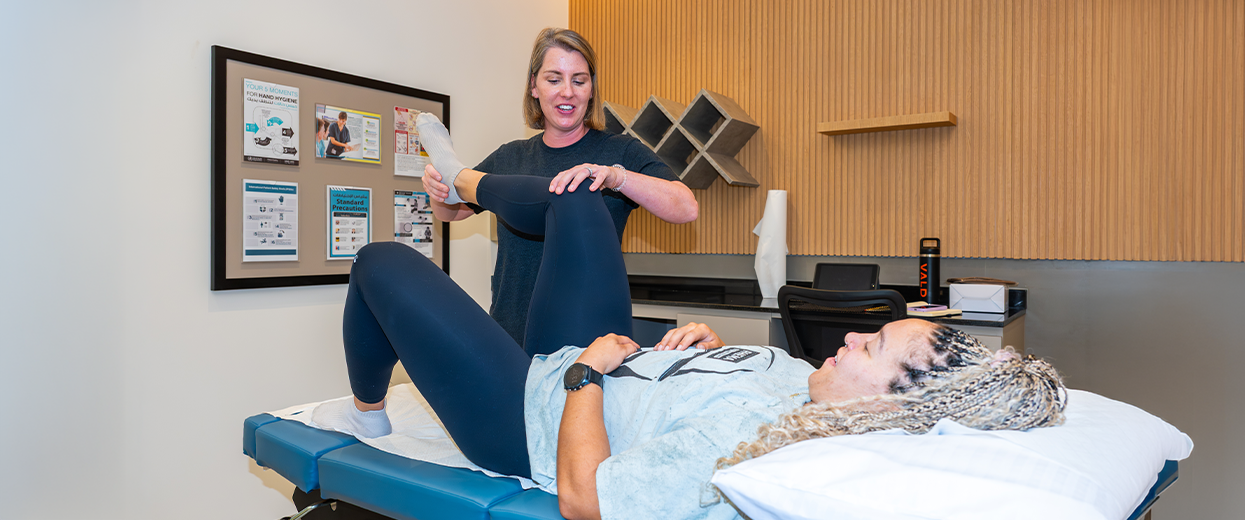
At Align Health, physiotherapy for marathon recovery can include an assessment of the painful area, strength and movement testing, review of recent training load, and a progressive return-to-running plan based on your symptoms and goals.
You can also meet our physiotherapy specialists across our Abu Dhabi clinics if you need help deciding whether post-race pain is normal recovery or something that needs rehabilitation.
Returning to Running After the Race
There is no universal day on which every runner should restart training. A runner who feels generally sore but improves each day is different from someone with focal knee pain, a painful Achilles tendon, or a limp. Your return should be guided by how your body is recovering rather than by pressure to get back to a training plan.
When you do restart, easy running should feel controlled during the session and should not produce a significant increase in symptoms afterwards. If symptoms keep returning with each attempt, that is useful information. It may mean the problem needs more than extra rest.
Marathon Recovery at Align Health
A marathon can leave your legs sore without anything being wrong. The key is the pattern. General muscle soreness that gradually improves is very different from pain that is sharp, localised, worsening, or repeatedly stopping you from running.
If your post-marathon leg pain does not feel like normal recovery, our physiotherapy team can assess the problem and help you plan a safe return to running. Book your appointment at alignhealth.ae or call 02 585 8322 (Al Zeina) or 02 671 9103 (Saadiyat).
Frequently Asked Questions
How long is it normal to feel sore after a marathon?
General muscle soreness is commonly most noticeable during the first few days after a marathon and should then trend in the right direction. Recovery varies with training history, race effort, terrain, sleep, and individual response. Pain that is worsening or remaining highly localised should be assessed.
Should I run the day after a marathon?
Most runners do not need to rush back into running the next day. Gentle walking and normal daily movement are usually more appropriate while the legs are very sore. Your return to running should depend on how well you are moving and how symptoms are changing.
Is calf pain normal after a marathon?
Muscle soreness in both calves can occur after a marathon. A single calf that becomes markedly swollen, hot, red, or unusually painful is different and should be medically assessed, especially if you also develop chest pain or shortness of breath.
Can sports massage help after a marathon?
Massage may temporarily reduce soreness for some people, but it does not replace recovery, nutrition, sleep, or assessment of an injury. Avoid deep or aggressive treatment over an area that is acutely injured, significantly swollen, or unusually painful.
When should I see a physiotherapist after a marathon?
Consider an assessment when pain is focal, changes your walking or running, is not improving, keeps returning when you try to run, or leaves you unsure whether you are dealing with normal soreness or an injury.
Blog written by Fernando Tassi Salati, Physiotherapist.
References
Cheung K, Hume P, Maxwell L. Delayed onset muscle soreness: treatment strategies and performance factors. Sports Medicine. 2003;33(2):145-164. doi:10.2165/00007256-200333020-00005.
Metra M, Feasson L, Ravel A, et al. Neuromuscular Fatigue and Recovery: Are Marathon and Trail Running Different? Medicine & Science in Sports & Exercise. 2026 Oct 23. doi:10.1249/MSS.0000000000004200.
Backer HC, Richards JT, Kienzle A, et al. Exertional Rhabdomyolysis in Athletes: Systematic Review and Current Perspectives. Clinical Journal of Sport Medicine. 2023;33(2):187-194. doi:10.1097/JSM.0000000000001082.
Afonso J, Clemente FM, Nakamura FY, et al. The Effectiveness of Post-exercise Stretching in Short-Term and Delayed Recovery of Strength, Range of Motion and Delayed Onset Muscle Soreness: A Systematic Review and Meta-Analysis. Frontiers in Physiology. 2021;12:677581.