
post marathon

Post-Marathon Leg Pain: What’s Normal and When Should You Get It Checked?

Finishing a marathon is a major physical effort, so waking up the next morning with heavy, stiff, sore legs is not unusual. Your quadriceps may complain on stairs, your calves may feel tight, and getting up from a chair can suddenly feel like its own event. For most runners, this reflects the normal recovery response to prolonged loading rather than a new injury.

The challenge is knowing where normal post-race soreness ends and where pain deserves a closer look. A marathon can expose an irritated tendon, bone stress injury, muscle strain, joint problem, or other issue that was not obvious during the race. Knowing what to watch for can help you recover without either panicking about every ache or ignoring something important.

Align Health is a DOH-certified physiotherapy clinic in Abu Dhabi. The information in this blog is for educational purposes only and is not a substitute for professional medical advice, diagnosis, or treatment. Always consult a qualified healthcare provider regarding your specific condition.

Why Do Your Legs Hurt After a Marathon?

A marathon places repeated load through the muscles, tendons, joints, and bones of the lower limbs for several hours. The muscles also perform a large amount of eccentric work, particularly when controlling landing and deceleration. That can contribute to exercise-induced muscle damage and delayed onset muscle soreness, commonly called DOMS.

DOMS usually develops after unfamiliar or demanding exercise rather than during the activity itself. The soreness can become more noticeable during the first one to three days and then gradually settle. Recent research on marathon runners also shows that neuromuscular fatigue and some markers of muscle damage can remain altered beyond the finish line, which is one reason performance may feel reduced even when you are otherwise well.

What Normal Post-Marathon Soreness Often Feels Like

Normal recovery does not look identical for every runner, but post-marathon muscle soreness is usually broad rather than sharply localised. Both legs may feel tired, stiff, tender, or heavy, particularly through the quadriceps, calves, hamstrings, and glutes.

  • The discomfort is mostly muscular rather than a sharp pain in one exact spot.
  • Stairs, squatting, or sitting down may feel uncomfortable because the muscles are sore.
  • Gentle walking may feel stiff initially but becomes easier as you move.
  • Symptoms gradually improve rather than becoming more severe each day.
  • There is no major loss of function, significant swelling, or inability to put weight through the leg.

The goal during this phase is not to force the soreness away. Your body has been through a demanding event, and recovery is part of training too.

When Leg Pain Is Less Typical

Pain deserves more attention when it behaves differently from general muscle soreness. A sharp or highly localised pain that changes the way you walk, pain directly over a bone, marked joint swelling, significant bruising, or a feeling that the leg cannot support you should not simply be labelled as DOMS.

Persistent tendon pain around the Achilles, knee, or hip may also need assessment, particularly if it was present during training and became worse during the race. The same applies when pain improves with rest but returns immediately when you try to run again.

Red Flags After a Marathon

Some symptoms need medical attention rather than routine sports recovery. Seek urgent assessment if you develop severe or rapidly worsening pain, major swelling, new numbness or weakness, an inability to bear weight, dark or cola-coloured urine with significant muscle pain or weakness, or a swollen painful calf accompanied by shortness of breath or chest pain.

Exertional rhabdomyolysis is uncommon, but it is a serious condition involving substantial muscle breakdown after strenuous exercise. Dark urine, severe muscle pain, swelling, or weakness after an endurance event should not be dismissed as a normal part of marathon recovery.

What Should You Do in the First Few Days?

Recovery after a marathon is usually simple rather than aggressive. Prioritise sleep, fluids, regular meals, and gentle movement. Short walks and easy mobility can help you feel less stiff, but the days immediately after the race are not the time to test your fitness with hard intervals, heavy leg training, or another long run.

You do not need to stretch intensely because your muscles feel tight. In fact, research has not shown post-exercise stretching to be a reliable way of reducing DOMS. Light movement that feels comfortable is often a more sensible starting point.

Where Does Physiotherapy Fit Into Marathon Recovery?

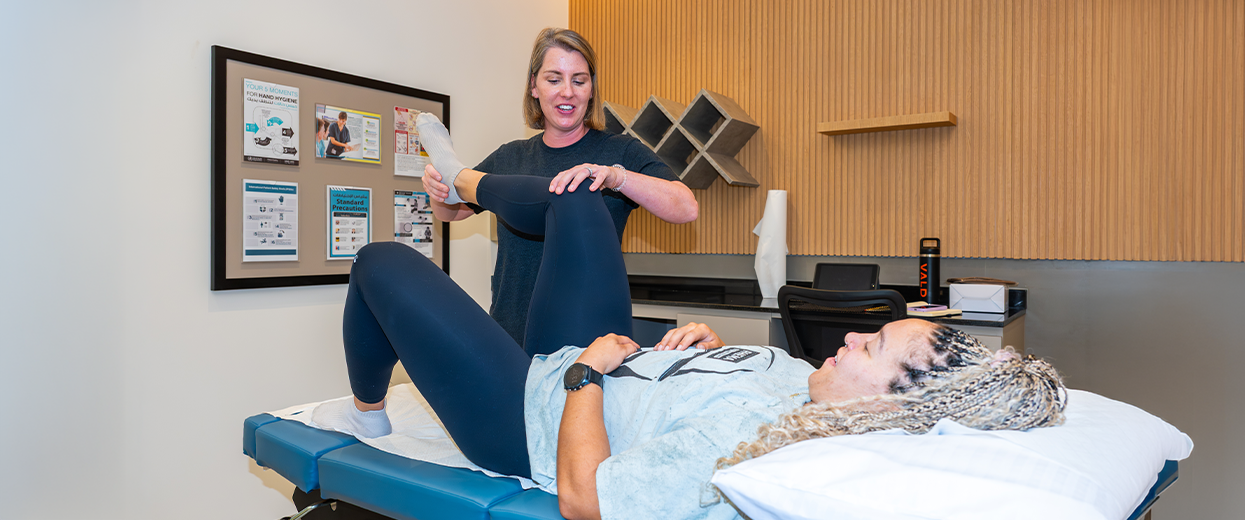
If the soreness is settling normally, you may not need treatment at all. Physiotherapy becomes more useful when pain is localised, symptoms are not improving, you are unsure whether you have an injury, or you need a structured plan for returning to training.

At Align Health, physiotherapy for marathon recovery can include an assessment of the painful area, strength and movement testing, review of recent training load, and a progressive return-to-running plan based on your symptoms and goals.

You can also meet our physiotherapy specialists across our Abu Dhabi clinics if you need help deciding whether post-race pain is normal recovery or something that needs rehabilitation.

Returning to Running After the Race

There is no universal day on which every runner should restart training. A runner who feels generally sore but improves each day is different from someone with focal knee pain, a painful Achilles tendon, or a limp. Your return should be guided by how your body is recovering rather than by pressure to get back to a training plan.

When you do restart, easy running should feel controlled during the session and should not produce a significant increase in symptoms afterwards. If symptoms keep returning with each attempt, that is useful information. It may mean the problem needs more than extra rest.

Marathon Recovery at Align Health

A marathon can leave your legs sore without anything being wrong. The key is the pattern. General muscle soreness that gradually improves is very different from pain that is sharp, localised, worsening, or repeatedly stopping you from running.

If your post-marathon leg pain does not feel like normal recovery, our physiotherapy team can assess the problem and help you plan a safe return to running. Book your appointment at alignhealth.ae or call 02 585 8322 (Al Zeina) or 02 671 9103 (Saadiyat).

Frequently Asked Questions

How long is it normal to feel sore after a marathon?

General muscle soreness is commonly most noticeable during the first few days after a marathon and should then trend in the right direction. Recovery varies with training history, race effort, terrain, sleep, and individual response. Pain that is worsening or remaining highly localised should be assessed.

Should I run the day after a marathon?

Most runners do not need to rush back into running the next day. Gentle walking and normal daily movement are usually more appropriate while the legs are very sore. Your return to running should depend on how well you are moving and how symptoms are changing.

Is calf pain normal after a marathon?

Muscle soreness in both calves can occur after a marathon. A single calf that becomes markedly swollen, hot, red, or unusually painful is different and should be medically assessed, especially if you also develop chest pain or shortness of breath.

Can sports massage help after a marathon?

Massage may temporarily reduce soreness for some people, but it does not replace recovery, nutrition, sleep, or assessment of an injury. Avoid deep or aggressive treatment over an area that is acutely injured, significantly swollen, or unusually painful.

When should I see a physiotherapist after a marathon?

Consider an assessment when pain is focal, changes your walking or running, is not improving, keeps returning when you try to run, or leaves you unsure whether you are dealing with normal soreness or an injury.

Blog written by Fernando Tassi Salati, Physiotherapist.

References

Cheung K, Hume P, Maxwell L. Delayed onset muscle soreness: treatment strategies and performance factors. Sports Medicine. 2003;33(2):145-164. doi:10.2165/00007256-200333020-00005.

Metra M, Feasson L, Ravel A, et al. Neuromuscular Fatigue and Recovery: Are Marathon and Trail Running Different? Medicine & Science in Sports & Exercise. 2026 Oct 23. doi:10.1249/MSS.0000000000004200.

Backer HC, Richards JT, Kienzle A, et al. Exertional Rhabdomyolysis in Athletes: Systematic Review and Current Perspectives. Clinical Journal of Sport Medicine. 2023;33(2):187-194. doi:10.1097/JSM.0000000000001082.

Afonso J, Clemente FM, Nakamura FY, et al. The Effectiveness of Post-exercise Stretching in Short-Term and Delayed Recovery of Strength, Range of Motion and Delayed Onset Muscle Soreness: A Systematic Review and Meta-Analysis. Frontiers in Physiology. 2021;12:677581.

Sports Massage therapist

The Importance of A Sports Massage Therapist in Injury Rehabilitation

If you are a sports enthusiast or an athlete, you definitely have knowledge about the importance of a sports massage therapist in your life. There is no denying that athletes are some of the most common people who are prone to getting injuries. As they have to participate in different sports activities, there are chances of injury a lot more compared to other people. With professional sports therapy, athletes can actually get a lot of importance.

A sports massage therapist plays an important role when it comes to the rehabilitation process or recovering from an injury. The reason is that sports therapy generally involves choosing particular techniques that are specially designed to improve the recovery mechanism of your body, increase physical performance and get rid of pain. As athletes are prone to getting injured, it is important for them to choose a professional sports massage therapist. Not only does sports massage result in reducing the chances of pain, but it also helps to prevent injuries.

If you are an athlete, and this is the first time you have started your journey, it is important that you start looking for a sports massage therapist in Abu Dhabi near you who can constantly help you in the journey. Remember that you do not have to just visit only when you’re injured, but you can take Sports therapy before participating.

What is a sports massage? 

Sports massage can also be referred to as sports therapy, which is a kind of therapy that is specially dedicated to athletes. These are provided by professionals as they require proper knowledge and particular massage on muscles. The most common importance of taking sports therapy is it helps athletes to prevent injury, season their body for athletic activities which are generally intensive, maintain optimum condition, and one of the most important parts is that it helps athletes to recover from injuries and work out.

However, it will require a great therapist who can provide deep tissue massage in Abu Dhabi to be able to provide the best sports therapy. As mentioned, techniques generally include friction, deep tissue massage, and stretching which are used by a sports massage therapist to target specific groups of muscles and soft tissues, which are mostly prone to getting injured and stressed.

Why Athletes Should Take Sports Massage?

There are multiple reasons why athletes need to start looking for a sports massage therapist from where they can get proper therapy. Here are some of them.

Improves motion and enhances flexibility: Sports massage therapy is actually a culmination of different techniques that are provided by a professional therapist to lose muscles and fascia. The primary intention is to improve flexibility and help athletes to get a greater range of motion. Sports massage therapy will generally include a specific motion to the targeted muscles to help them perform optimally and reduce the chances of injuries.

Reduce muscle spasms and tension: Taking regular sports therapy from a renowned sports massage therapist in Abu Dhabi can always be beneficial for athletes to prevent injury. Regular regular sports massage is greatly helpful as it becomes beneficial to reduce muscle tension and tightness. Therefore, it can help athletes to perform better performance without feeling discomfort within their bodies. When there is reduced tension in the muscles, it actually prevents muscle strain and injuries.

It increases circulation: One of the primary reasons why massage is known to be a great way and holistic way to improve body functioning is because it helps to increase circulation. Similarly, when you choose a sports massage therapist, their targeted massage helps to boost blood circulation. It is an important part of delivering nutrients and oxygen to every muscle. With proper sports therapy, it can enhance blood flow and ensure faster recovery and healing of the muscle tissues that have been injured.

Stress reduction and pain relief: Sports therapy is also known to be a holistic way to treat chronic conditions without the need for painkillers. This is a therapeutic technique mostly used by therapists to relieve pain. It helps to reduce stress and get rid of the pain from injury by promoting relaxation and encouraging the release of endorphins in the body, which are known to be the natural painkillers in our body.

Prevent future injuries: A sports massage therapist is not only required when you have gone through an injury, but a therapist can also make sure to address muscle imbalance and improve muscle elasticity. The targeted massage that they provide can greatly be helpful in preventing future injuries. It, therefore, can help athletes in a better way to enjoy the best conditions during their sports activities.

So, these are some of the most common reasons wise sports therapy can be a great choice for several purposes. Not only do you have to look for a sports massage therapist in Abu Dhabi when you are injured, but you can also treat your body properly before going for an athletic activity. A deep tissue massage in Abu Dhabi provided by the therapist can ensure that your body is prepared to take the challenge without making you feel discomfort.

Importance of Sports Massage in Healing from Injury 

If you have recently gone through an injury from sports activity, a sports massage therapist is the professional that you need initially. Here are some of the reasons why sports therapy can be greatly beneficial to heal from an injury.

It accelerates the recovery process

The primary reason for sports therapy is that it plays an important role in getting rid of metabolic waste products like lactic acid. This generally accumulates within the muscles when there is intense physical activity. The accumulation can result in muscle fatigue and soreness and slow down the overall recovery process. With sports therapy, the professionals enhance drainage and help to clear the waste product from the body efficiently. In addition to this, massage can greatly improve circulation and therefore increase oxygen delivery and nutrients to the injured tissues. It facilitates faster recovery and repair processes.

It improves the tissue repair process

Some of the most common techniques used by a sports massage therapist in Abu Dhabi include friction. This is particularly known to be extremely effective during the massage as it breaks down the scar tissues and adhesions that clearly form after an injury. When a tissue is scarred, it can restrict movement and result in discomfort. It also limits the performance of an athlete. As a sports massage therapist applies precise pressure on the targeted group, they can ensure helping on the problematic areas by breaking down scarred tissues and enhancing muscle elasticity. The process not only improves normal movement but will also prevent forming addition.

It enhances mobility

One of the primary reasons to choose sports therapy during injury rehabilitation is that it helps restore mobility. When swelling and pain start subsiding, sports therapy can help to reintroduce flexibility and movement in the affected areas. Some of the most common techniques like mobilisation and stretching, under the surveillance of a sports massage therapist, can gently help the joints and muscles get back to the normal range of motion. This is especially vital for athletes as they cannot handle restricted mobility as it will refrain them from providing the ultimate performance and increase the chances of injuries.

It helps to build stamina and strength

When it is during the later stages of rehabilitation, sports therapy can be greatly beneficial in rebuilding stamina and strength in the group of muscles. As it helps to condition muscles and cardiovascular health, the therapy can make sure that the injured muscle is able to regain strength without getting overloaded. Some of the most common techniques like deep tissue massage can be greatly beneficial as it helps to stimulate muscle fibres and increase endurance. Therefore, athletes can rebuild their stamina gradually.

It manages pain effectively

One of the primary reasons for choosing a sports massage therapist in Abu Dhabi is because they help to manage pain. It is a critical aspect. As they help to relax muscle tension and promote the release of endorphins in your body, massage therapy can be significantly beneficial in pain relief. Endorphins are the natural painkillers in your body that help to reduce pain and improve mood. It also allows athletes to manage pain more effectively which is important for maintaining a positive outlook. Choosing a sports massage therapist can also make sure that there is a reduced need for pain medication which has severe side effects.

Psychological benefits

Taking deep tissue massage in Abu Dhabi from the best sports massage therapist also has several psychological benefits that are important during the recovery process. It reduces stress and anxiety by having the relaxing effect of massage. It plays a crucial role in maintaining the overall well-being of an athlete. A more positive mindset is extremely important as it accelerates physical healing, during the recovery process. Remember that stress and anxiety can be detrimental as they reduce the acceleration of healing.

Conclusion

The role of a sports massage therapist in the life of an athlete is an indispensable thing. Whether it is about preventing an injury or recovering after an injury, sports therapy can be greatly beneficial in different aspects. It reduces muscle tension, enhances flexibility, facilitates faster recovery, and improves circulation which contributes to the overall healing process. If you are looking for a great sports massage therapist in Abu Dhabi, You can get in touch with Align Health. With the best professionals in their team with knowledge and experience, they ensure providing exceptional results.